
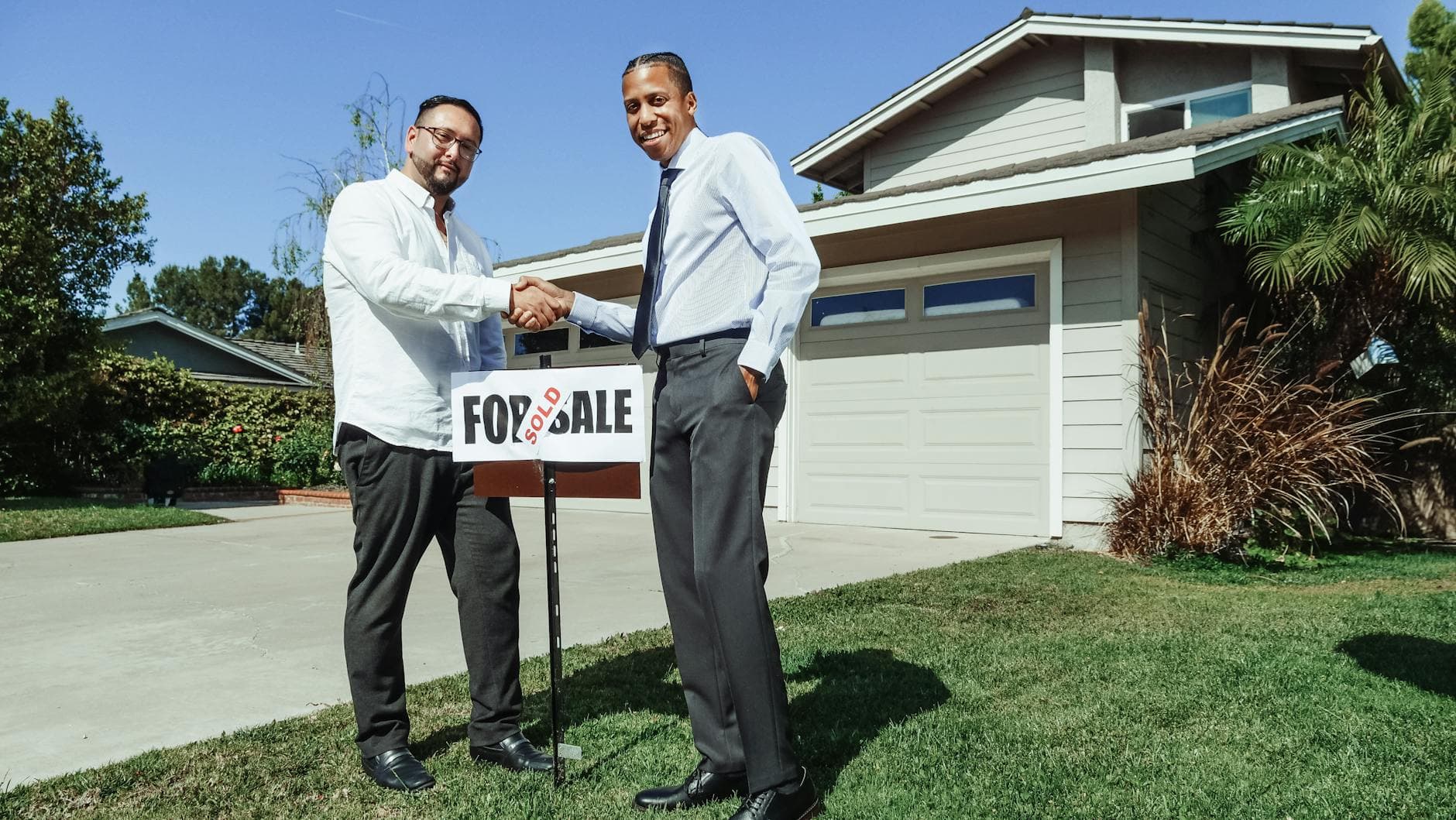
Why Most Real Estate Partnerships Fail
March 23, 2026
|By Tanner Sherman, Managing Broker
I have been in a partnership that worked and I have watched partnerships implode. The difference was never the deal. It was always the structure.
Two people shake hands on a duplex. They split the down payment. They agree to "figure it out as they go." One person handles the tenants, the other handles the books. Everything is great for 18 months. Then one partner wants to sell and the other wants to hold. One partner wants to refinance and pull cash out, the other wants to pay down the debt. One partner stops returning calls.
There's no resolution mechanism. There's no buyout clause. There's no operating agreement that anticipated this exact, entirely predictable scenario.
The deal was fine. The partnership was a time bomb with a handshake on top.
The Statistic Nobody Talks About
There's no clean dataset on partnership failure rates in real estate, but ask any real estate attorney how many partnership disputes they handle per year and you will get the picture. The unofficial consensus among operators I know is that more than half of informal real estate partnerships end in conflict. Not necessarily litigation, but damaged relationships, stalled assets, and dead equity that neither partner can access.
The root cause is almost always the same: the partners defined the deal but didn't define the relationship.
What Needs to Be Defined Before You Shake Hands
Capital Contributions and Ownership Percentages
This seems obvious, but I have seen partnerships where the initial capital split and the ownership split were different, and nobody documented why.
Who's contributing what, and when?
Is the split proportional to capital, or does one partner get an outsized share for operational work (sweat equity)?
If one partner contributes more capital later (for a repair, a capital call, a down payment shortfall), how does that change ownership?
Document the exact dollar amounts, the exact ownership percentages, and the exact mechanism for adjusting both if additional capital is needed. If you can't agree on this upfront, you won't agree on it when money is tight and tensions are high.
Decision Rights
Not every decision should require both partners to agree. That's a recipe for paralysis.
Define three tiers of decision-making:
Unilateral decisions. One partner can make these without consulting the other. Typically: maintenance under a dollar threshold (say $2,500), tenant screening decisions, lease renewals at or above current rent.
Consultation decisions. One partner makes the call but must inform the other before executing. Typically: lease terms outside standard parameters, vendor contracts, non-emergency repairs between $2,500 and $10,000.
Unanimous decisions. Both partners must agree. Typically: selling the property, refinancing, capital expenditures over $10,000, bringing in additional partners, any change to the operating agreement itself.
The threshold amounts matter. A $2,500 unilateral limit works for a duplex. It doesn't work for a 50-unit building. Scale the decision framework to the asset.
Roles and Responsibilities
"We will split everything 50/50" is the most dangerous sentence in real estate partnerships.
Somebody has to be the operator. Somebody has to make the calls, meet the contractors, handle the tenants, review the financials. If both partners assume the other person is doing it, nothing gets done. If both partners are doing everything, you have duplication and conflict.
Define who's responsible for:
Property management oversight (or direct management if self-managing)
Financial reporting and bookkeeping
Insurance, tax, and compliance management
Capital improvement planning and execution
Tenant relations and lease administration
Banking and cash management
One partner can handle multiple areas, but assign them explicitly. "General partner" and "limited partner" are legal terms, but the concept applies even in informal partnerships. Someone is active, someone is passive, and the operating agreement should reflect that.
Compensation for Active Partners
If one partner is doing all the work and both partners are splitting profits equally, resentment builds fast.
The active partner should be compensated for their time. This is separate from their ownership return. Common structures:
Asset management fee. 1-2% of gross revenue, paid to the active partner for oversight.
Property management fee. 8-10% of collected rent if the active partner is self-managing.
Acquisition fee. 1-2% of purchase price for sourcing and closing the deal.
Construction management fee. 5-10% of CapEx budget if the active partner is overseeing renovations.
These fees aren't greed. They're market-rate compensation for real work. If the passive partner objects to paying them, ask this question: what would you pay a third-party property manager to do the same work? That's the number. The active partner shouldn't be subsidizing the passive partner's return with free labor.
Distributions and Cash Management
When does money come out, and how?
Distribution frequency. Monthly? Quarterly? Annually? Define it.
Distribution priority. Does one partner get paid back their capital contribution first (a preferred return) before profits are split? This is standard in syndications and should be standard in partnerships.
Reserve requirements. How much cash stays in the property's operating account before distributions begin? We keep a minimum of $300 per unit in reserves. Below that, distributions pause until the reserve is rebuilt.
Reinvestment decisions. If the property generates $20,000 in annual cash flow, does all of it distribute, or does some get reinvested in improvements? This needs to be decided in the operating agreement, not debated each quarter.
The Exit
This is the section that prevents lawsuits. And it's the section most partnerships skip.
Buyout provisions. If one partner wants out, how is the buyout price determined? Options include:
Agreed-upon appraisal process (each partner selects an appraiser, they agree on a third if needed)
Formula-based valuation (cap rate applied to trailing 12-month NOI)
Right of first refusal at a price determined by an outside offer
Forced sale provisions. Under what circumstances can one partner force a sale of the property? Common triggers: inability to agree on major decisions for a defined period (say 90 days), default on capital call obligations, material breach of the operating agreement.
Death or disability. What happens if one partner dies or becomes incapacitated? Does the surviving partner have the right to buy out the estate? Is there a life insurance policy funding the buyout? This is morbid planning, but I have seen a partner death turn a performing asset into a 2-year probate nightmare.
Drag-along and tag-along rights. If one partner receives a buy offer, can they force the other to sell (drag-along)? If one partner sells their interest, does the other have the right to sell on the same terms (tag-along)? These provisions protect both sides.
The Two Partnership Structures I Trust
After watching enough partnerships go sideways, I have landed on two structures that work.
Structure 1: Clear Operator / Clear Investor
One partner is the operator. They find the deal, manage the asset, and make day-to-day decisions. The other partner provides capital and receives passive returns.
The operator gets compensated through fees and a promoted interest (a larger share of profits above a preferred return threshold). The investor gets preferred returns and downside protection.
This works because the roles are clear, the incentives are aligned, and there's no ambiguity about who does what.
Structure 2: Equal Partners with a Managing Member
Both partners contribute capital equally and share ownership equally. But the operating agreement designates one partner as the managing member with authority over daily operations.
The managing member gets a small additional fee (1-2% of revenue) for the administrative burden. Major decisions still require both partners. But the day-to-day doesn't get bogged down in committee meetings.
This works for partners who trust each other and have complementary skills, as long as the decision framework is clearly defined.
The Conversation Nobody Wants to Have
Here's the uncomfortable truth. The reason most partnerships fail isn't legal. It's personal.
People go into partnerships with friends, family members, or acquaintances because they like each other. They don't ask the hard questions because the questions feel adversarial. "What happens if you stop contributing capital?" feels like saying "I don't trust you."
But the operating agreement isn't a statement of distrust. It's a statement of clarity. It protects both partners from the version of themselves that shows up when money is tight, markets are down, or life gets complicated.
Every partnership that has worked in my experience had one thing in common: the partners had the uncomfortable conversation before they wrote the check. They defined the rules, agreed to live by them, and put them on paper.
Every partnership that failed had one thing in common too: they skipped that conversation. And they paid for it later. With money, with time, and usually with a relationship.
Define it before you shake hands. Your future self will thank you.
We talk about this every week on the Freedom Fighter Podcast. Listen on Spotify, Apple, or YouTube. Or reach out at Tanner@TopTierInvestmentFirm.com.
Tanner Sherman is the Principal and Managing Broker of Top Tier Investment Firm in Omaha, Nebraska. He co-hosts the Freedom Fighter Podcast with Ryan of Avara Investments.
Related Reading
The Biggest Lie in Real Estate: Passive Income
How Depreciation Actually Works for Real Estate Investors
Building a Real Estate Portfolio on a W2 Salary
The Operating Agreement Clause That Could Save Your Partnership
Related Insights
All Insights →Why We Invest Alongside Our Investors
I have a simple rule. If I wouldn't put my own money into a deal, I'm not bringing it to my investors.
Investor EducationWhy Debt Isn't the Enemy (But the Wrong Debt Is)
I have been broke and in debt. I have also been cash-flowing and in debt. Those are two very different situations, and understanding the difference is the entire game in real estate investing.
Investor EducationWhat Happens to Your Portfolio When Interest Rates Drop
Everybody is waiting for rates to drop. I hear it on every call. "We're going to buy when rates come down." "We will refinance once the Fed cuts."
Want to talk strategy?
30 minutes. No pitch. Just your numbers.
Bring a deal, a portfolio, or a question. We will walk through the numbers together and tell you straight what we see.