
Utilities: The Line Item That Kills More Deals Than You Think
March 20, 2026
|By Tanner Sherman, Managing Broker
I underwrote a 16-unit building in Bellevue last year that looked perfect on paper. Good location. Solid rents. Low vacancy. The cap rate was attractive and the seller was motivated.
Then I pulled the utility bills.
The building was master-metered for water, sewer, and gas. The owner was paying $2,400 per month in utilities that the tenants had zero incentive to conserve. That's $28,800 per year coming straight out of NOI.
The deal didn't die because of the purchase price or the rent roll. It died because the utility structure turned a 7.2 cap into a 5.1 cap after I adjusted for reality.
Utilities are the line item most investors glance at and most operators underestimate. On a multifamily property, your utility billing strategy can swing NOI by $500 to $1,500 per unit per year. That's the difference between a deal that works and a deal that bleeds.
Master Meter vs. Individual Meter: The Foundation
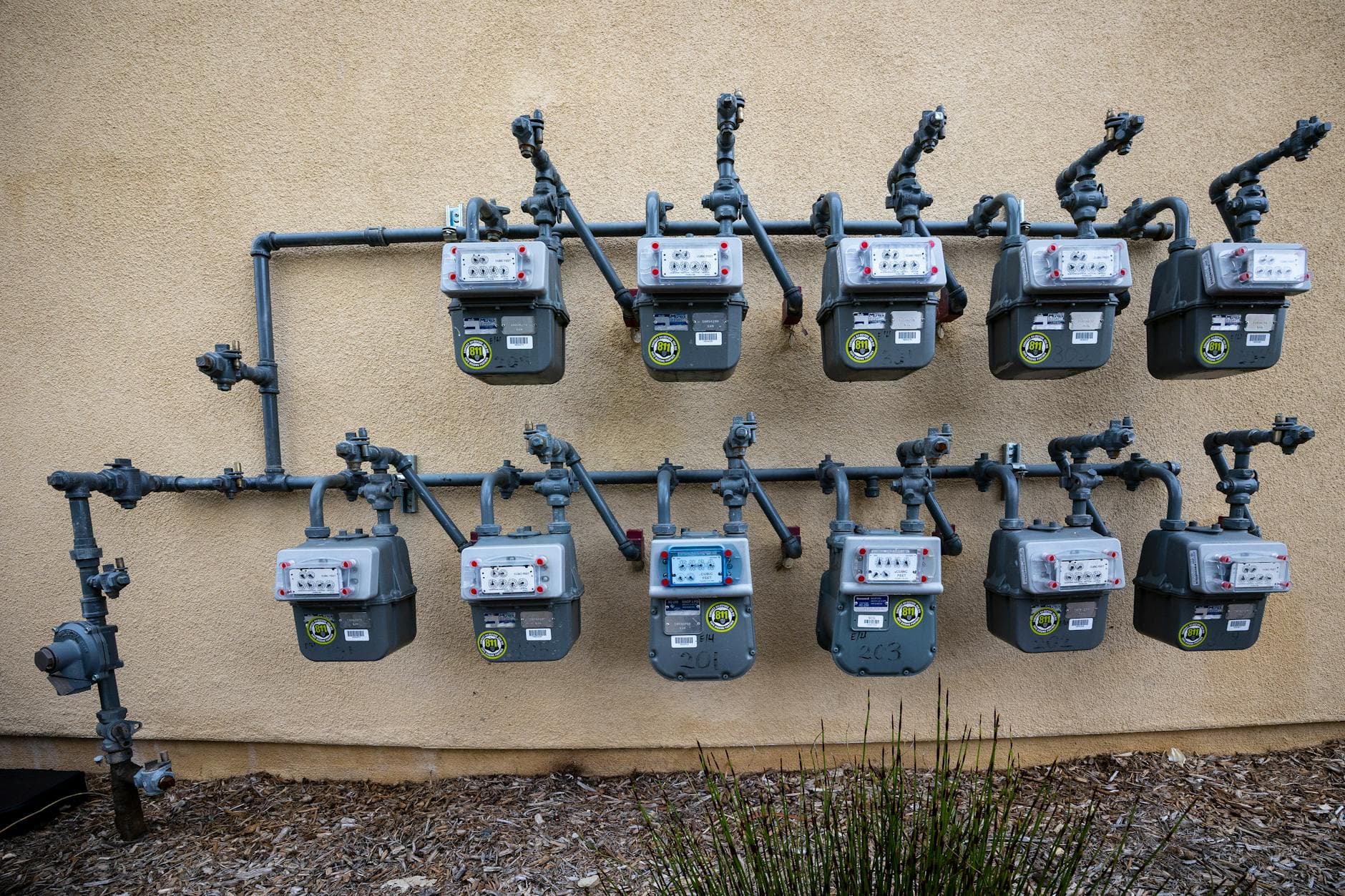
The most important question you can ask about any multifamily property is how the utilities are metered.
Individually metered means each unit has its own meter for electric, gas, water, or any combination. Tenants pay their own bills directly to the utility company. The owner's exposure is limited to common area usage.
Master metered means one meter serves the entire building. The owner gets one bill. Tenants have no visibility into their consumption and no financial incentive to conserve.
In the Omaha market, here's what I typically see:
Electric: Most multifamily buildings are individually metered for electric. This is the norm and the expectation.
Gas: Mixed. Newer construction tends to be individually metered. Older buildings (pre-1990) are often master-metered, especially if they use a central boiler system.
Water and sewer: Overwhelmingly master-metered. Individual water metering exists but is less common in older product. This is where the biggest expense exposure lives.
The financial impact isn't subtle. On a 20-unit building, master-metered water and sewer typically runs $800 to $1,500 per month depending on the building, the tenant base, and the local rate structure. That's $9,600 to $18,000 per year that the owner absorbs.
The same building with individual meters? The owner pays for common area irrigation and maybe a shared laundry hookup. Total: $100 to $300 per month. The rest is on the tenants.
That gap is NOI. That gap is property value. That gap is the deal.
RUBS: Recovering What You Can't Meter
If your building is master-metered and individual metering isn't economically feasible (it often isn't on older buildings; a retrofit can run $3,000 to $5,000 per unit), the answer is RUBS.
RUBS stands for Ratio Utility Billing System. It's a method of allocating the owner's utility costs back to tenants based on a formula. The most common allocation methods:
Square footage. Larger units pay a proportionally larger share. Simple. Fair. Easy to explain.
Occupancy. A unit with three people uses more water than a unit with one. The allocation adjusts based on the number of occupants listed on the lease.
Hybrid. A combination of square footage and occupancy. This is the most accurate and the method we use.
How it works in practice:
The owner receives the monthly water/sewer bill of, say, $1,200. A third-party billing company or the property manager calculates each unit's share based on the allocation formula. Each tenant receives a utility charge on their monthly statement alongside rent.
Typical recovery rate: 70-85% of the total utility cost. You won't recover 100%. Common area usage (landscaping, laundry, hallway cleaning) stays with the owner, and most RUBS programs cap the passthrough to avoid overcharging.
On our 20-unit example with a $1,200/month water bill:
Without RUBS: Owner pays $1,200. Annual cost: $14,400.
With RUBS at 80% recovery: Owner pays $240. Annual cost: $2,880.
Annual savings: $11,520.
At a 7 cap, that $11,520 in recovered NOI creates $164,571 in additional property value. From a billing system that costs maybe $5 to $8 per unit per month to administer through a third-party provider.
The Submetering Option
Submetering is the gold standard for utility cost management. Instead of allocating costs by formula, you install individual meters on each unit's water line (or gas line) and bill based on actual consumption.
Advantages over RUBS:
Tenants pay for exactly what they use. No arguments about fairness.
Conservation incentives are real. Studies show that submetered tenants use 15-25% less water than tenants on a flat allocation.
Recovery rates approach 90-95% because the billing is based on actual metered consumption, not a ratio.
The cost:
Installation: $300 to $800 per unit for wireless submeters (older buildings may require more extensive plumbing work)
Monthly reading and billing service: $8 to $12 per unit
When it makes sense:
Buildings with 20+ units where the installation cost is justified by the volume of recovery
Buildings you plan to hold for 5+ years (the payback period on installation is typically 18-36 months)
Buildings with high water consumption due to in-unit laundry, older fixtures, or high-occupancy units
When RUBS is the better play:
Smaller buildings (under 15 units) where the per-unit installation cost is harder to justify
Buildings you plan to sell within 2-3 years
Buildings where the plumbing configuration makes individual metering prohibitively expensive
How Utility Strategy Affects Your Underwriting
When I underwrite-a-multifamily-acquisition) an acquisition, utility metering is one of the first things I look at. Here's why.
Scenario: 24-unit building, asking price $1.2 million
Current situation: Master-metered water/sewer. Owner pays $1,800/month ($21,600/year). No billback program.
With RUBS implementation (80% recovery):
Recovered: $17,280/year
Net utility cost to owner: $4,320/year
NOI improvement: $17,280
Value creation at 7 cap: $246,857
With submetering (92% recovery + 20% conservation):
Consumption drops from $21,600 to $17,280 (20% conservation)
Recovered: $15,898/year (92% of reduced amount)
Net utility cost to owner: $1,382/year
NOI improvement: $20,218
Installation cost: $12,000 (amortized over 5 years: $2,400/year)
Net annual benefit: $17,818
Value creation at 7 cap: $254,543
Both strategies dramatically change the deal. A building that's overpriced at a 5.5 cap might be a bargain at 7.2 once you factor in utility recovery.
This is why utility billing isn't a back-office decision. It's an acquisition strategy.
Common Mistakes in Utility Management
Mistake 1: Not auditing the actual bills. I have seen owners paying utility bills without looking at them. Water leaks, broken irrigation systems, and running toilets can add $200 to $500 per month to a building's water bill without anyone noticing. Pull 24 months of utility bills. Look for spikes. Investigate anything that deviates more than 15% from the average.
Mistake 2: Implementing RUBS without proper lease language. You can't bill tenants for utilities unless the lease allows it. If your current leases say "water included," you can't start billing RUBS mid-lease. You have to wait for renewal and update the lease language. This means RUBS implementation takes a full lease cycle (12 months) to reach all units.
Mistake 3: Overcharging and creating turnover. If you implement RUBS and charge tenants $80/month for water when comparable buildings charge $40, you're creating a turnover incentive. The RUBS charge needs to be reasonable, consistent with the market, and transparent. We always send tenants a breakdown showing the building's total bill and how their share was calculated.
Mistake 4: Ignoring common area waste. Before you pass costs to tenants, reduce the costs. Fix running toilets. Replace old fixtures with low-flow models. Fix irrigation leaks. Install timers on common area lights. Every dollar you save on the total bill is a dollar you don't have to fight about with tenants.
Mistake 5: Not checking the rate structure. Municipal water rates in the Omaha metro aren't uniform. Rates vary by municipality and sometimes by usage tier. Some buildings are on a commercial rate when they should be on a residential rate, or vice versa. A five-minute call to MUD can sometimes save hundreds per year.
The Bottom Line
Utilities aren't a cost of doing business. They're a management decision. The difference between an owner who pays $28,800 a year in tenant water bills and an owner who recovers $23,000 of that isn't luck. It's a system.
If you're buying a master-metered building, the utility structure is part of the underwriting. If you own a master-metered building and aren't billing back, you're subsidizing your tenants' water usage with your NOI.
Fix the billing. Fix the NOI. Fix the value.
If you own rental properties and you're not sure they're hitting their ceiling, let's talk. Reach out at Tanner@TopTierInvestmentFirm.com.
Tanner Sherman is the Principal and Managing Broker of Top Tier Investment Firm in Omaha, Nebraska. He co-hosts the Freedom Fighter Podcast with Ryan of Avara Investments.
Related Reading
Full Cycle Deals: Why Completed Exits Tell the Real Story
Best Real Estate Investments for Dermatologists (Beyond the Practice Building)
Should Your Shop Own Its Real Estate? A Shop Owner's Guide to Buying the Building
Plastic Surgeons: Own the Building Your Practice Operates In
Related Insights
All Insights →Home Price to Rent Ratio by City: The One Number That Screens a Market Before You Ever Call a Broker
Home price to rent ratio by city, explained with real thresholds. Model it yourself, then talk to a broker who gets DS/ML buyers.
Asset ManagementReal Estate Investing for Content Creators: Turning Algorithm Income Into Owned Assets
Real estate investing for content creators and influencers. How creators should invest their money in assets an algorithm can't touch.
Asset ManagementDealer or Investor? The IRS Test Every Dealer Principal Needs to Know Before Buying Real Estate
Dealer or investor classification real estate tax: how the IRS test applies to dealer principals buying property beyond the dealership lot.
Want to talk strategy?
30 minutes. No pitch. Just your numbers.
Bring a deal, a portfolio, or a question. We will walk through the numbers together and tell you straight what we see.